如何评价华为跑分作弊的传统艺能最近又被Geekbench发现了?
根据Geekbench列出了跑分作弊名单,Huawei Mate 30 Pro 5G赫然在列:
https://browser.geekbench.com/mobile-benchmarks
(Excluded Devices在该网页的底部)
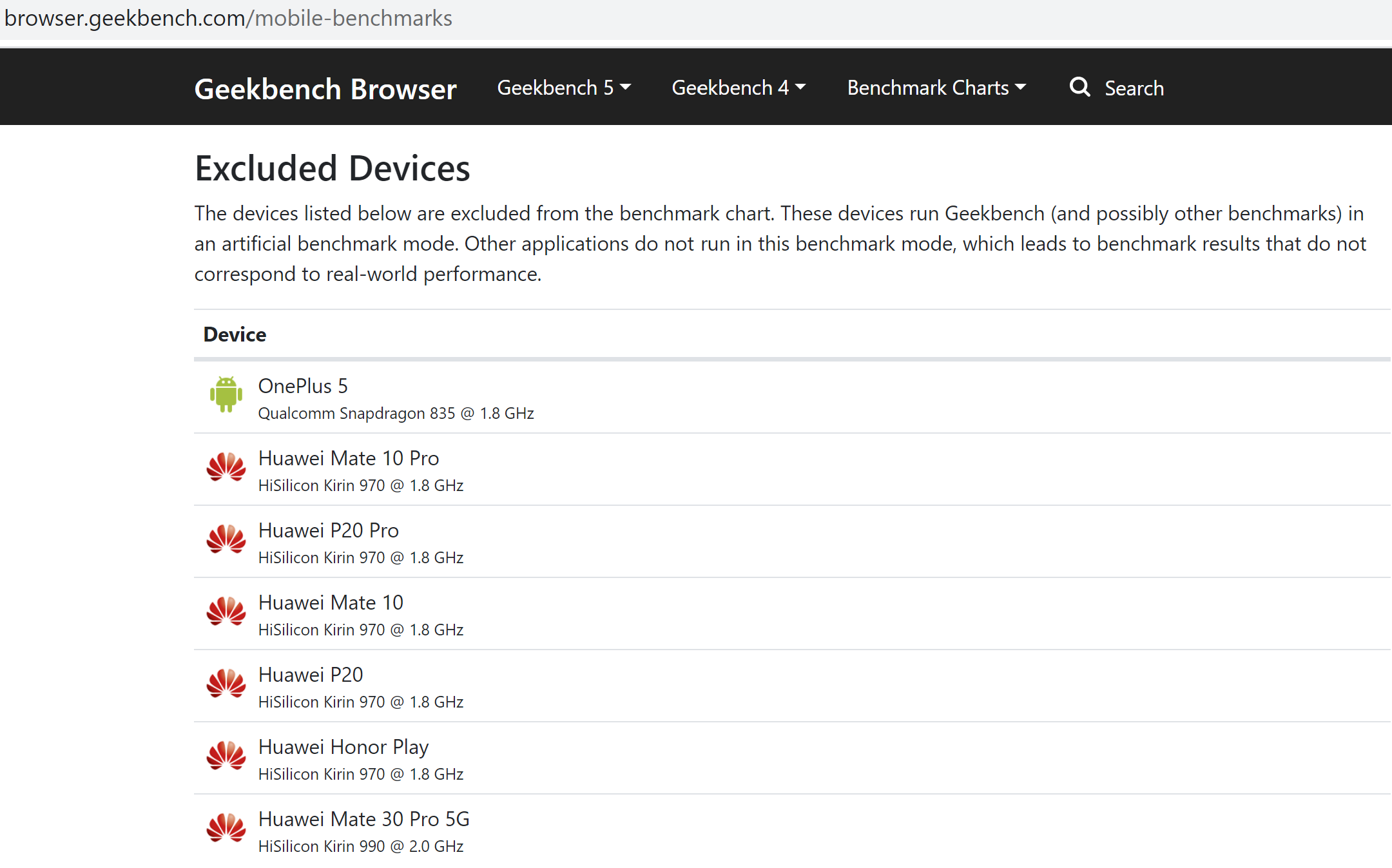
The devices listed below are excluded from the benchmark chart. These devices run Geekbench (and possibly other benchmarks) in an artificial benchmark mode. Other applications do not run in this benchmark mode, which leads to benchmark results that do not correspond to real-world performance.
在这之前(2018年9月),Geekbench引述了Anandtech关于华为操纵手机性能跑分的情况:
https://www.geekbench.com/blog/2018/09/huawei-benchmark-boost/
Primate Labs will exclude the following Huawei phones from the Android Benchmark Chart and the Mobile Benchmark Chart, and will add an alert to individual results for the following Huawei phones that the phones attempt to manipulate benchmark results:
https://www.anandtech.com/show/13318/huawei-benchmark-cheating-headache
As part of our phone comparison analysis, we often employ additional power and performance testing on our benchmarks. While testing out the new phones, the Honor Play had some odd results. Compared to the Huawei P20 devices tested earlier in the year, which have the same SoC, the results were also quite a bit worse and equally weird.
Within our P20 review, we had noted that the P20’s performance had regressed compared to the Mate 10. Since we had encountered similar issues on the Mate 10 which were resolved with a firmware update pushed to me, we didn’t dwell too much on the topic and concentrated on other parts of the review.
Looking back at it now after some re-testing, it seems quite blatant as to what Huawei and seemingly Honor had been doing: the newer devices come with a benchmark detection mechanism that enables a much higher power limit for the SoC with far more generous thermal headroom. Ultimately, on certain whitelisted applications, the device performs super high compared to what a user might expect from other similar non-whitelisted titles. This consumes power, pushes the efficiency of the unit down, and reduces battery life.
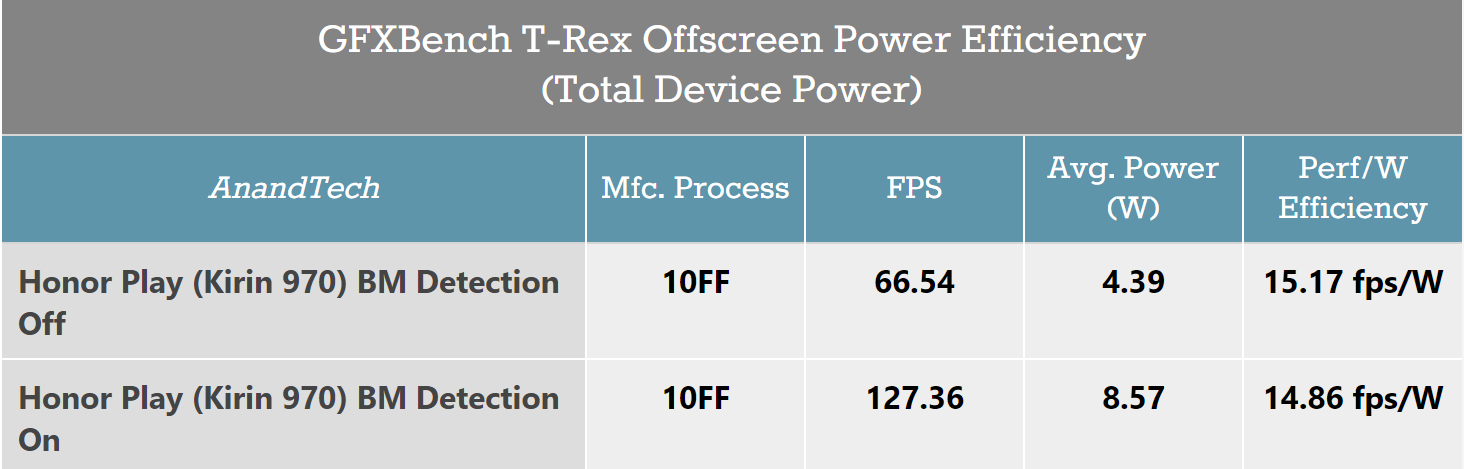
This has knock-on effects, such as trust, in how the device works. The end result is a single performance number is higher, which is good for marketing, but is unrealistic to any user with the device. The efficiency of the SoC also decreases (depending on the chip), as the chip is pushed well outside its standard operating window. It makes the SoC, one of the differentiating points of the device, look worse, all for the sake of a high benchmark score. Here's the example of benchmark detection mode on and off on the Honor Play:
https://browser.geekbench.com/mobile-benchmarks
(Excluded Devices在该网页的底部)
The devices listed below are excluded from the benchmark chart. These devices run Geekbench (and possibly other benchmarks) in an artificial benchmark mode. Other applications do not run in this benchmark mode, which leads to benchmark results that do not correspond to real-world performance.
在这之前(2018年9月),Geekbench引述了Anandtech关于华为操纵手机性能跑分的情况:
https://www.geekbench.com/blog/2018/09/huawei-benchmark-boost/
Primate Labs will exclude the following Huawei phones from the Android Benchmark Chart and the Mobile Benchmark Chart, and will add an alert to individual results for the following Huawei phones that the phones attempt to manipulate benchmark results:
- Huawei P20
- Huawei P20 Pro
- Huawei Mate 10
- Huawei Mate 10 Pro
https://www.anandtech.com/show/13318/huawei-benchmark-cheating-headache
As part of our phone comparison analysis, we often employ additional power and performance testing on our benchmarks. While testing out the new phones, the Honor Play had some odd results. Compared to the Huawei P20 devices tested earlier in the year, which have the same SoC, the results were also quite a bit worse and equally weird.
Within our P20 review, we had noted that the P20’s performance had regressed compared to the Mate 10. Since we had encountered similar issues on the Mate 10 which were resolved with a firmware update pushed to me, we didn’t dwell too much on the topic and concentrated on other parts of the review.
Looking back at it now after some re-testing, it seems quite blatant as to what Huawei and seemingly Honor had been doing: the newer devices come with a benchmark detection mechanism that enables a much higher power limit for the SoC with far more generous thermal headroom. Ultimately, on certain whitelisted applications, the device performs super high compared to what a user might expect from other similar non-whitelisted titles. This consumes power, pushes the efficiency of the unit down, and reduces battery life.
This has knock-on effects, such as trust, in how the device works. The end result is a single performance number is higher, which is good for marketing, but is unrealistic to any user with the device. The efficiency of the SoC also decreases (depending on the chip), as the chip is pushed well outside its standard operating window. It makes the SoC, one of the differentiating points of the device, look worse, all for the sake of a high benchmark score. Here's the example of benchmark detection mode on and off on the Honor Play:

这个叫华为的共产党土匪企业的欺诈常态不足为奇

不止华为,国产厂商都喜欢搞这种小把戏糊弄消费者
这种事情哪都有,前两年大众也是在柴油发动机汽车的尾气排放上造假,一测试就控制功耗,不同的是被曝光后总裁辞职。

针对特定场景的性能调整原本是好的
但是你给跑分软件列个白名单,打游戏的时候却自动降低分辨率就有点坑了吧?
但是你给跑分软件列个白名单,打游戏的时候却自动降低分辨率就有点坑了吧?
牢廠在弄虛作假上早就劣跡斑斑' 被發現也只是識貨的人知道' 其他不知道的被哄蒙的一直還以用牢廠爲榮耀
华为这些人真的要把牢底坐穿,如果新中国成立的话。
我更关注的是今年华为海思能不能继续使用升级的ARM架构,去年A77他们没用上,导致跑分一下子就跌下来了。
我感覺華為現在也沒甚麼必要這樣做
這是壞習慣改不了還怎樣
這是壞習慣改不了還怎樣

西方反华势力亡我之心不死,颜色革命,251看到被伟大光荣慈爱高贵耀眼永远胜利的党击溃了恼羞成怒又开始攻击华为了。
而且GB好像是在加拿大的,那更好,这是给孟公主落井下石。
赶紧让伟大的党派兵救出公主,然后用核弹把加拿大炸沉吧。
所以大家觉得这个能加速吗?
而且GB好像是在加拿大的,那更好,这是给孟公主落井下石。
赶紧让伟大的党派兵救出公主,然后用核弹把加拿大炸沉吧。
所以大家觉得这个能加速吗?
